
You’re eating well. You’re exercising. You’re trying to prioritize sleep. You may even feel like you’re doing more for your health than you ever have.
And yet… something feels different. Maybe you don’t feel great in your body. Maybe your body composition is changing. Maybe you’re finding it harder to maintain muscle. Maybe your energy or strength isn’t what it used to be. Or maybe you’re simply realizing that the workouts that worked for you in your 20s and 30s don’t quite give you the same results anymore.
There are many reasons this can happen after 35, and there’s one piece of the puzzle I think women often underestimate: Strength training.
Not because you need to spend hours in a gym lifting the heaviest weights, nor because you need to give up the movement you love. But because maintaining and building muscle becomes increasingly important as we age.

Why muscle matters more than we think
As we age, we naturally become more prone to losing muscle mass and strength. Hormonal changes during perimenopause and menopause can make this process more noticeable, while other factors - like being less active, inadequate protein intake, stress and insufficient recovery - can contribute as well.
And muscle isn’t just about having toned arms or looking strong. Muscle plays an important role in how we move, how we use glucose, how we maintain our strength and independence, and how our bodies age.
It’s also closely connected to another important concern for women as we get older: bone health.
Resistance exercise gives your bones and muscles a reason to adapt and stay strong. That’s one reason strength training becomes such an important part of a long-term health strategy—not simply an aesthetic one.
And here’s the good news: it’s never too early - nor too late - to start. Whether you’re in your 30s, 40s, 50s, 60s or 70s, your body can benefit from getting stronger.
So if you’re already in your 60s or 70s and haven’t been doing strength training, don’t look at that as a missed opportunity. You haven’t missed the window. Starting later is still incredibly worthwhile. You can build strength, improve physical function and support your health at any stage of life!
Do you need to lift heavy weights every day?
Absolutely not. (This is where I think the conversation around exercise can become unnecessarily extreme).
I love strength training, but I also love barre, Pilates, walking, hiking, dancing and other forms of exercise.
As you might know, I’m a certified barre instructor and Functional Power Yoga teacher, so I genuinely love barre and yoga. These forms of movement have been a huge part of my own life and fitness practice, and I absolutely believe they have a place in a well-rounded exercise routine.
But now that I’m in my 40s, I’ve also intentionally added heavier resistance training to my routine. Not because I’ve stopped loving barre and yoga, and certainly not because I think one form of exercise is “better” than another. I think they’re complementary.
Strength training gives my body a different kind of stimulus, which I feel my body while barre, Pilates and yoga help me work on things like stability, mobility, balance, body awareness and control. Walking and cardiovascular exercise add another important dimension.
I also think it’s important to train more than just muscle. As we age, we can experience declines in bone density, balance, mobility, agility and power. That’s why I like incorporating different types of movement into my strength workouts, including moving in different directions - forward, backward and side to side, along with exercises that challenge my balance, coordination and speed.
I definitely suggest trying to add some short bursts of plyometrics (more explosive movements like jumping) or other dynamic exercises. The goal is to build not just strength, but also the ability to move well, react quickly and stay balanced as we get older. Of course, exercises should be adapted to your fitness level and abilities.
Just remember, you don’t have to choose. Your week might include a few purposeful strength-training sessions (with short bursts of HIIT, optional), your favorite barre or Pilates classes, some yoga, regular walks, maybe an outdoor sport, and/or whatever else you genuinely enjoy.
Also remember that your ideal routine will look different depending on your age, fitness level, goals, schedule and health.
The goal isn’t to exercise as much as possible. The goal is to give your body different reasons to be strong, mobile and resilient.
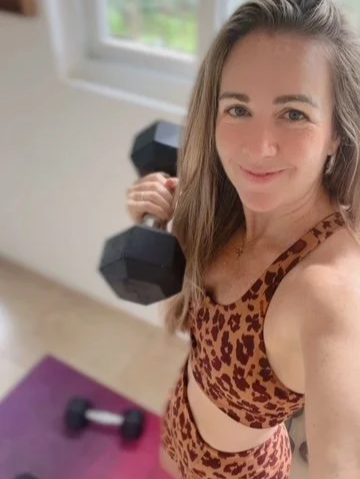
What does “strength training” actually mean?
It doesn’t have to look like bodybuilding. Strength training simply means challenging your muscles against resistance.
That might mean dumbbells, barbells, resistance bands, machines or even your own body weight. The key is progressive overload—gradually challenging your muscles more over time.
That might mean increasing the weight, adding repetitions, improving your form or progressing to a more challenging variation of an exercise.
And you don’t need to constantly chase heavier weights (though it does help, especially in your first year, to gradually increase your weights).
Your training should also consider your experience level, goals, injuries, recovery and the other movement you’re doing.
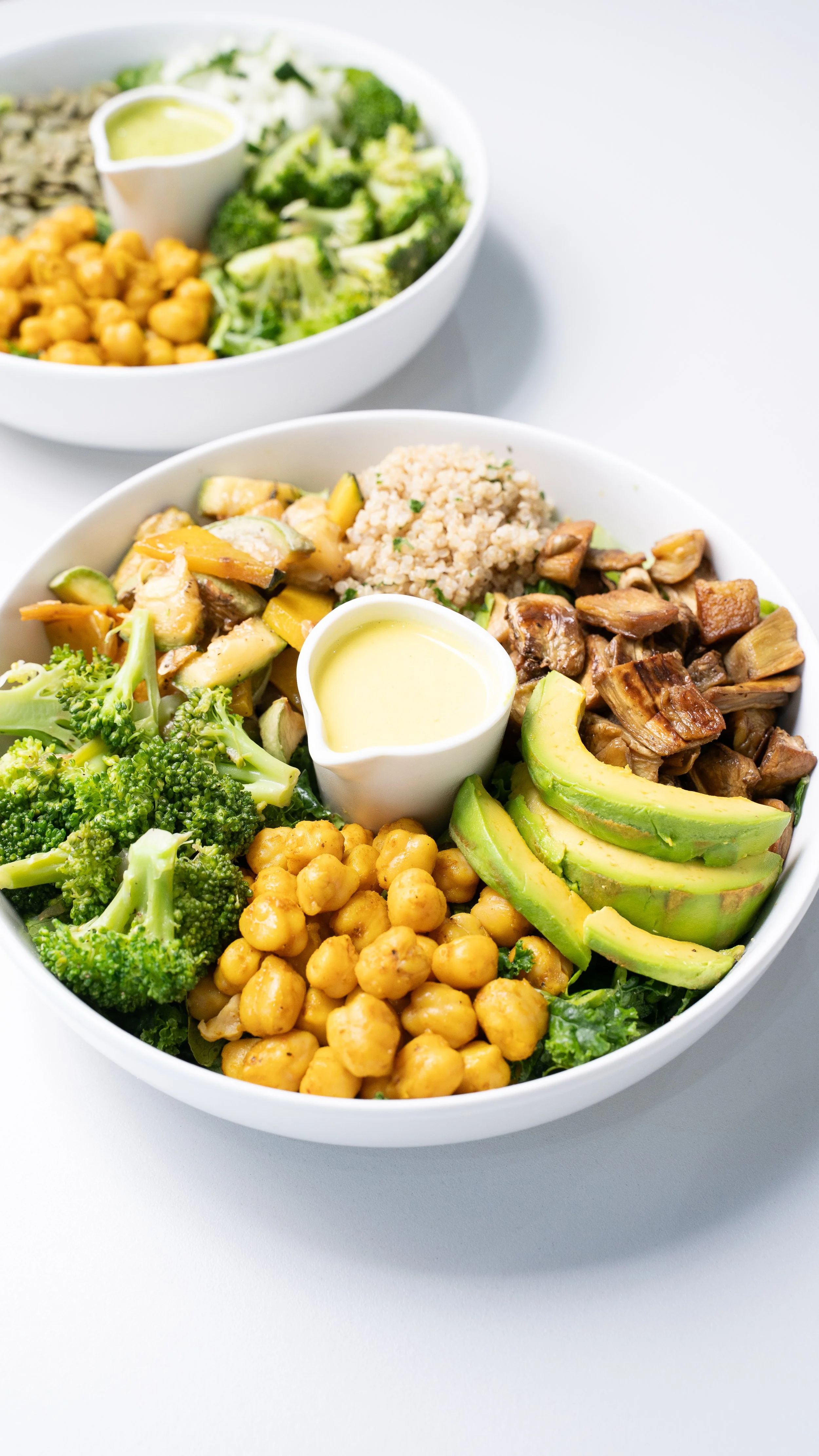
Don’t forget to fuel the work you’re asking your body to do. Don’t forget protein (and yes, carbs too).
Strength training works best when you give your body the building blocks and fuel it needs.
For women (especially in midlife), getting enough protein throughout the day is KEY for supporting muscle maintenance and repair.
Plus, it can help with improving body composition and weight loss, too!
But protein isn’t the only thing that matters. If you’re adding more resistance training, lifting heavier or increasing the intensity of your workouts, your body may benefit from having more carbohydrates available, particularly around your training.
This DOES NOT mean you need a high-carb diet, and it certainly doesn’t mean you need to eat large amounts of carbss every day. I actally guide most of my clients to a slightly lower carb diet, especially after 40. But on days when you’re asking your muscles to work harder, strategically including a quality source of carbohydrates at breakfast or lunch, especially around your workout, can help provide energy for training and support recovery.
Think: a little fruit, sweet potatoes, beans, lentils or another minimally processed carbohydrate that works well for your body.
I also sometimes add a “pre-workout” snack, which usually for me is 1/2 slice of my seed bread (with my matcha-moringa-collagen latte) in the mornings (my large breakfast comes after the workout!), and when I teach in the afternoons, I often add a homemade protein energy ball pre-workout to help keep me properly fueled.
You can essentially apply this a simple form of carb cycling: eating more carbohydrates on the days when your body has a greater demand for them, and less when your activity is lighter.
NOTE: How much carbohydrates you need will depend on your overall diet, activity level, training intensity and individual needs. Even your hormones play a role.
Some people may naturally eat a little more on their harder training days and less on days when they’re less active, and that’s perfectly reasonable. I usually recommend more intuitive eating, TUNING-IN to your body and what its asking of you, instead of always measuring.
The bigger point is simply this: Don’t increase your training substantially while simultaneously under-fueling your body. If you’re trying to build or maintain muscle while consistently eating too little, your body doesn’t have the resources it needs to perform, recover and adapt optimally. Plus, it adds STRESS to your body, which can backfire!
The goal isn’t simply to train harder. It’s to train, fuel and recover well enough for your body to become stronger.
Recovery is part of the workout
More exercise isn’t automatically better. Muscle needs recovery to adapt. Sleep matters. Nutrition matters. Rest days matter.
Did you know… we challenge our muscles during exercise, but we actually BUILD and REPAIR them during recovery!
We don’t need to work out intensely every single day. You can have challenging strength sessions on some days, and choose gentler movement on others. A walk, a barre class, Pilates, mobility work or simply taking a rest day can all have a place in a healthy exercise routine.
Train hard enough to challenge your body, but recover enough to let it respond.
The bigger picture
If you’re over 40 and wondering why your body doesn’t respond exactly the way it used to, don’t assume that the answer is simply to eat less or exercise more.
Sometimes the answer is to train smarter.
Prioritize strength.
Eat enough protein.
Fuel harder training sessions appropriately (eat plenty protein, and some complex carbs, too!)
Move your body in ways you enjoy. YES adding in some weights is KEY, but you don’t have to give up the exercises you love most.
Keep some cardiovascular exercise in your routine. Walking, cycling, outdoor sports, or whatever you prefer!
Complement your workout routine with some barre, Pilates and/or yoga (I’m a huge believer in this!).
And give yourself enough recovery to actually benefit from all of it.
Because after 35-40, fitness isn’t just about how your body looks today. It’s about building the strength, muscle, bone health and physical capacity you want to carry with you for decades to come.
I hope this motivates you to add a bit more strength training. Whether you sign up with a trainer, or do videos at home, make a commitment today!
P.S. If you have some weights at home and want to try FREE workoutst, I highly recommend NourishMoveLove! They’re the ones I’m personally doing at home right now (apart from my barre and pilates) and I’m hooked.