
Halloween is around the corner, which means… a LOT of candy is about to enter our homes. 🍬🎃
And if you’re anything like me, you probably have mixed feelings about it. While Halloween can be a lot of fun, decorating. dressing up, and trick-or-treating with the kids, friends and family, I don’t like the sugar-rush that comes with this holiday.
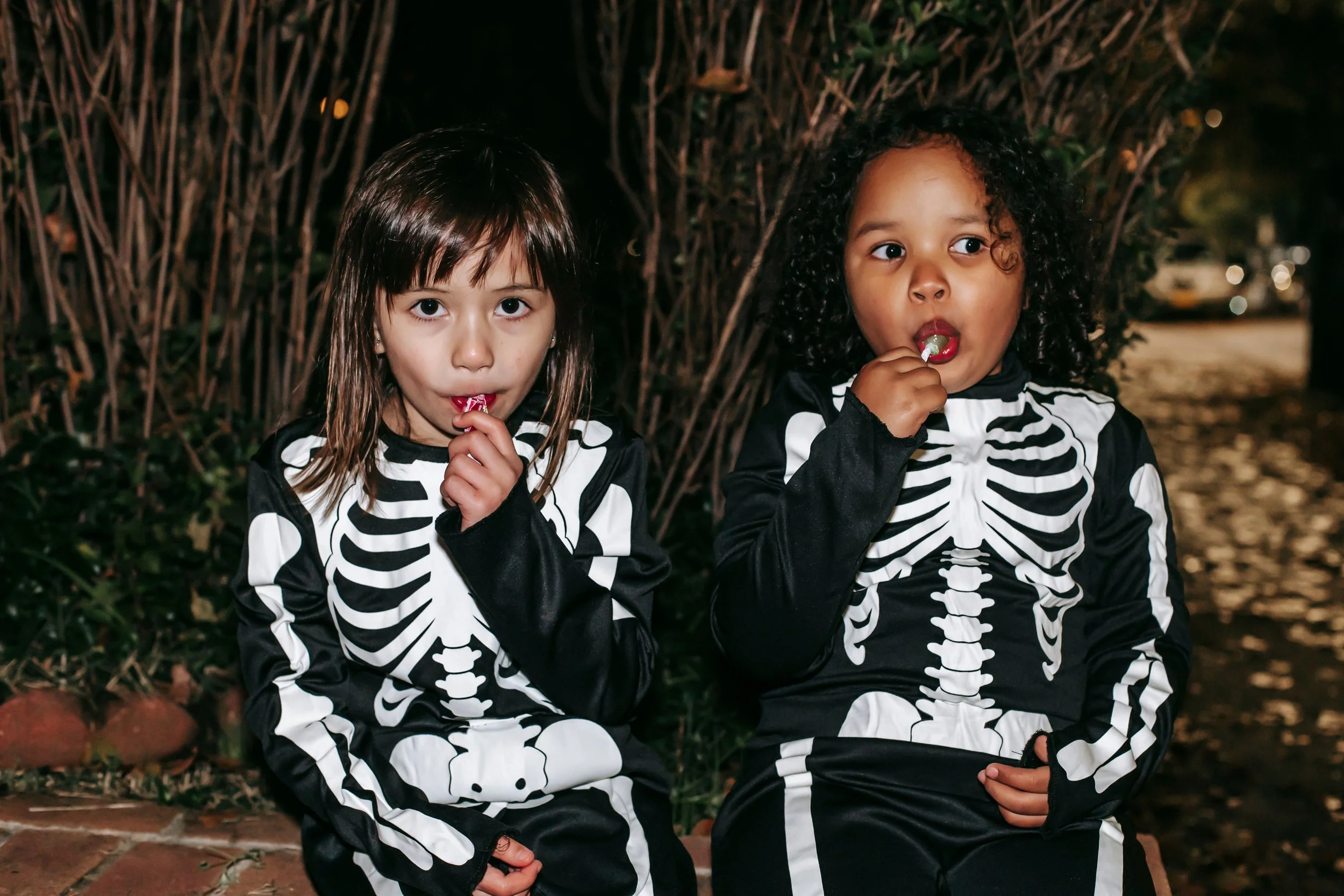
As a mom, health coach, and someone who cares a lot about nutrition and overall health (especially for my kids), I want to minimize how much added sugar my kids eat. All the treats with added sugars flood their developing bodies with empty calories, cause blood sugar spikes and crashes, and alters brain-reward pathways.
Also, the constant influxes of added fructose force the liver to convert excess sugar directly into fat. This triggers insulin resistance over time, meaning cells stop responding to insulin, keeping blood glucose levels dangerously high and marching the body straight toward prediabetes.
Just to nerd out for a sec, I can share some quick statistics: A massive 2020 meta-analysis found that high consumption of sugar-sweetened beverages is associated with a 25% to 40% increase in ADHD symptoms or diagnosis risk. [1, 2, 3]. Separetely, a Yale School of Public Health study found that for every single sweetened drink a young teen consumes per day, their risk of hyperactivity and inattention increases by 14%. [1]
So yes, I want my kids to understand that eating too much sugar isn’t good for their bodies and can affect everything from their energy and mood to their teeth, digestion and long-term health.
But I also know that sweets are going to be part of their lives. There will be Halloween candy, birthday cake, ice cream with friends and treats at school. And rather than pretending those foods don’t exist, I want to teach my kids how to navigate them (without necessarily demonizing all sugar).
For me, the goal is not to fully restrict access to any sugar, but to create healthy boundaries around it, while still allowing them to enjoy a treat without guilt when the occasion calls for it. Here’s what that can look like in our home…
5 tips for setting healthier boundaries around sugar with the kids
When I can, I choose better-quality treats. 🍫
Candy is still candy, even when it’s organic. But organic options with simpler ingredients and without artificial colors, flavors nor unnecceary additives are better choices.
Some brands I like include YumEarth, UNREAL, Alter Eco and Hu, among others.
We also make plenty of treats at home, where I can control the ingredients and amount of added sugar - things like energy balls, homemade cookies, muffins, and healthier versions of popular desserts.
Does that mean I panic if they get conventional candy at a birthday party or on Halloween? No. Because what they eat consistently matters much more than what they eat occasionally.I teach them WHY we limit sugar.
I don't think there's anything wrong with telling our kids that certain foods aren't very good for their bodies. In fact, I think nutrition education can start very young, as long as we keep it simple and age-appropriate.
I might say: “That has a lot of sugar, so we're only going to have a little.”
“Too much sugar can make your tummy hurt.”
“Let's eat some real food first so your body gets the protein and nutrients it needs.”
My goal isn't to make them feel guilty for wanting candy. It's to help them understand why we don't eat it all day, every day.
Just as we teach our children why sleep, movement and brushing their teeth are important, we can teach them why nourishing their bodies with real food matters too.Boundaries and enjoyment can coexist.
I don't believe that teaching moderation means children need unlimited access to sweets. We're still the parents; it's okay to set boundaries.
At the same time, I don't want candy to become so forbidden or exciting that the minute we're not around, they feel the need to eat as much of it as possible.
So when they do have treats, I want them to enjoy them, and also start learning when they've had enough.
If they eat too much and later complain that their tummy hurts, I might ask:
“How does your tummy feel?”
“Do you think all those sweets made you feel very good?”
“What could we do differently next time?”
Those little experiences help them begin connecting what they eat with how they feel. Ultimately, I want them to learn to make good choices even when Mom isn't standing next to them saying yes or no.Don't send them to the party hungry! 🍭
This is one of my favorite practical strategies.
Before a Halloween event, birthday or celebration, make sure they've eaten a proper, healthy meal; something nourishing with protein, fiber and healthy fats.
A child who arrives hungry to a table filled with candy, cookies and cake is naturally going to want to eat more of it. (Adults aren't much different!)
And when we get home, I prefer having specific times to enjoy one treat, rather than leaving a giant bowl of candy sitting out all day for everyone to graze on.Have a plan for ALL that leftover candy. 🎃
Because somehow one little Halloween bucket turns into enough candy to last until Christmas!
Let your kids choose some of their favorites, and decide together what to do with the rest. You could donate or share some, save a small amount for another occasion, use it for a holiday activity, or even let them exchange some of it for a book, toy or special experience.
The point is helping them understand that they don’t have to eat every piece simply because they collected it.

And finally… let’s zoom out a bit. I strongly believe in MINIMIZING added sugar for children. But I also believe that what our kids do most of the time matters far more than one night of Halloween candy.
What are they eating for breakfast, lunch and dinner?
Are they getting enough protein, vegetables, fruit, fiber and healthy fats?
Are they drinking mostly water instead of juices and sugary drinks?
Are they moving their bodies, sleeping enough and spending time outside?
Are we modeling the habits we hope they'll eventually choose for themselves?
That's the bigger picture.
I want my kids to understand that food is powerful, and that what they eat matters. I want them to know why we prioritize real, nourishing foods, and why we don't eat lots of sugar every day.
And I also want them to be able to enjoy a piece of Halloween candy, birthday cake or homemade cookies, and then move on.
We can teach our kids to eat less sugar AND have a healthy relationship with food. Those two things don't have to be opposites. 💚
With love,
Mariana
P.S. I also wrote the blog in Spanish; see below. And I’ve included some other relevant blogs worth checking out!