
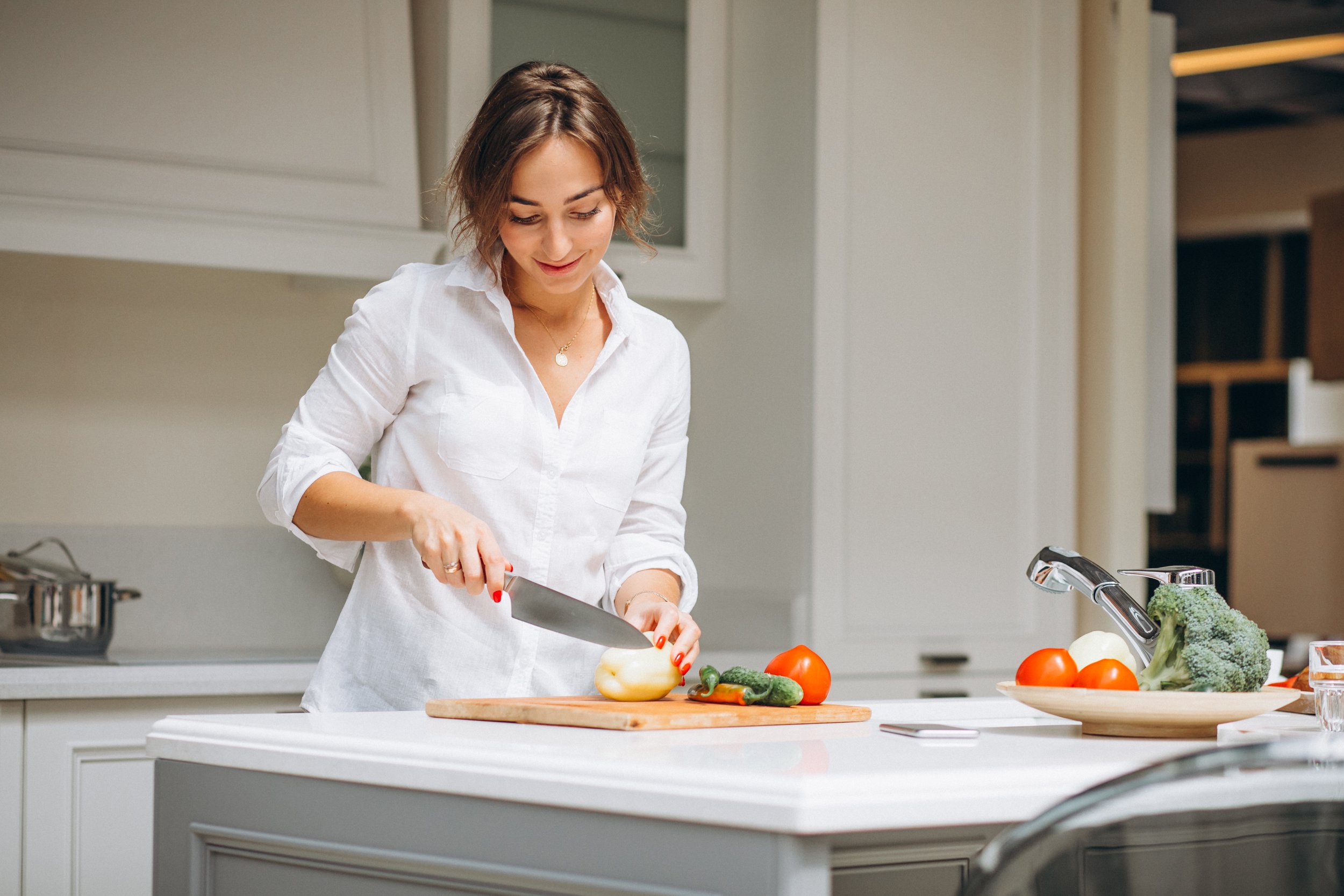
If there is ONE thing that I strongly believe is that the #1 step we should all take to reach our weight goals - and boost our overall health - is to COOK MORE FROM HOME.
Let’s start with the POSITIVES of eating more home cooked meals.
Eating more at home (i.e. more frequent home cooking) is associated with:
better diet quality (including higher nutrient consumption)
lower consumption of unhealthy ingredients
more vegetable and fruit intake (higher fiber and generally lower net carb)
less spending and better cost-effectiveness (yes even if you’re buying healthy, often expensive, primarily organic ingredients, you will save money buy cooking vs eating out)
Primarily, cooking more at home will improve your health (and help you lose weight) because you control the ingredients that go into your meals. It’s easier to avoid unnecessary additives that contribute to fat storage, plus you can control macro & micro nutrientes to make sure you’re getting enough.
When you cook with enough protein, fiber, healthy fats & antioxidants, you’ll likely be satiated for 4-5+ hours without cravings, and losing weight becomes that much easier. Plus, your entire metabolism and digestive system benefit immensely.
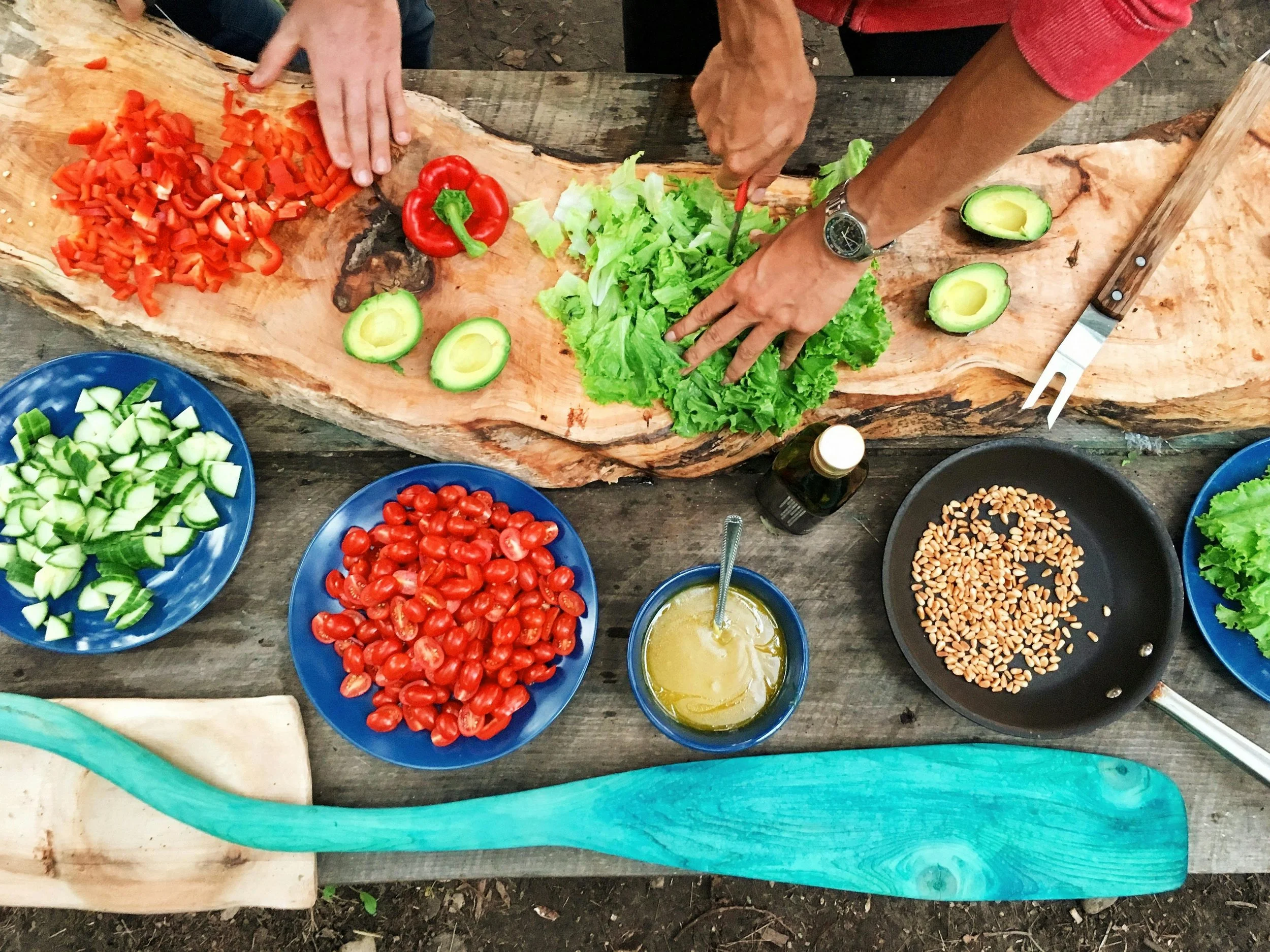
Now let’s switch to the negatives. What’s the harm in buying already prepped foods?
Most of these ready-to-eat meals are ultra-processed foods that contain unhealthy ingredients such as artificial flavors, preservatives and emulsifiers - which can negatively impact our gut, plus they tend to have lower nutrient density (vs. minimally procesed foods), are more calorie-dense, and whats worse, they have certain properties (such as softer texture, brighter colors, addictive smells, etc) which make it easier to overeat.
Even with these prepared foods are labeled as primarily organic and have marketing claims of being “all natural” or even “keto friendly” there is generally some catch. They are either high in carbs or very high in fats, and almost always have high sodium. They also genrally use more refined oils. It’s very hard for these packaged foods to be as “clean” and nutritious as what you’ll cook at home - especially once you start priotizing using only good quality oils, spices and other natural ingredients.
This is why I’m helping you with a good checklist for what you should have at home to make healthy cooking easier!
So my ONE recommendation for today is this: make your best effort to cook 90% of your meals at home.
Now, a few tips to get you started!
*Even if you already cook the majority of your foods from home, these tips will help as I’m sure there is a few things you might be missing!
Do some weekly meal prep!
Make your food shopping a bit easier by buying some already washed and chopped vegetables, fresh and frozen (more on this below)
Always have some salad greens ready (already washed) as well as one salad dressing on hand; this is key (salad dressing can be part of weekly meal prep, check out these easy healthy recipes)
Keep your freezer stashed with some basics for easy meals:
Frozen berries, preferably organic (for smoothies & smoothie bowls, or for a yogurt-chia-berry bowl, or topping to your overnight oats)
Frozen spinach, kale and cauliflwer rice, preferably organic (they work great as the base for a healthy protein smoothie, as well as side dishes to any lunch/dinner)
Frozen vegetables - ready to roast (like these) or saute (like these) - such as this (or in Nicaragua we have these). I also always have a few of my favorite veggies frozen for when I ran out of fresh veggies (i’ll keep bell peppers, green beans, brussels sprouts, broccoli and more in my freezer)
Meatballs and burgers (chicken, turkey, grass-fed beef and/or vegan ones such as my lentil-walnut meatballs, black bean burgers or lentil quinoa burgers) so you can quickly add protein to any pasta, salad and/or roasted veggies
Vacuum sealed proteins (ideally organic) such as chicken breasts, chicken wings or thighs, ground turkey, lamb, beef and other cuts of beef that you like, organic chicken sausages, wild-caught salmon fillets and other fish of your preference
Healthy seed bread, such as organic Ezekiel if you tolerate gluten, or a keto-friendly one (in Nicaragua I highly suggest balance food seed bread)
Regularly stock your fridge with healthy staples such as:
Lettuces and salad greens (if you find organic and already washed and ready to eat, great!) - as mentioned above
Other salad basics such as tomatoes/cherry tomatoes, shredded carrots, cucumber, avocados
High-protein cheeses if you eat dairy (ex. organic cottage cheese, parmesan cheese, feta and goat cheese, always choose organic if available)
Fresh vegetables and fruits (aim to buy mostly local, in-season)
Grain-free tortillas (i like Siete and Maria&Ricardos Carbbueno…)
Crganic almond or cashew or coconut milk (or make your own!)
Keep your pantry stacked with staples, such as:
A good variety of spices (preferable organic). I always have thyme, rosemary, herbs de provence, oregano, basil, nutmeg, cinnamon, pumpkin pie spice, curry, cumin, turmeric, coriander, other organic mixed seasonings (and more)
Different varieties of sea salt (grey celtic salt, real redmond and pink himalayan) and different varieties of pepper
Good quality organic oils/fats: extra vigin olive oil, cold pressed avocado oil, coconut oil, grass-fed ghee
Nuts and seeds (I like to have tons of varieties on hand, including chia, flax, hemp, sunflower, pumpkin seeds, as well as cashews, almonds, walnuts, macadamia nuts and brazil nuts, for example)
Nut/seed Butters: tahini, almond butter, cashew butter and organic peanut butter are my go-tos
Beans, chickpeas and lentils - either dry (or jarred or canned with bpa-free lining; preferably organic). I also love Lupini beans as theyre very low carb and high protein, and you can buy these for an easy snack!
Healthy condiments including:
Organic coconut aminos and tamari (which I add to almost all stir-fries ando many homemade sauces and dishes)
Other healthy sauces such as buffalo sauce (for super easy quick buffalo chicken wings) and sriracha
Avocado-oil based mayonnaise (and here is a great vegan mayonnaise, soy-free)
Bone broth (I’ll make homemade but since it is time consuming, I also suggest having both this bone broth in your pantry and these powdered bone broth packets which are super practical!)
Canned skipjack tuna (its the tuna lowest in mercury) and wild-caught salmon and sardines
Tomato sauces (organic or at least high quality, clean ingredients, made with extra-virgin olive oil) and canned or jarred tomatoes and tomato paste (*yes fresh is better but its handy to have some canned/jarred tomatoes on hand)
Canned organic coconut milk (free of preservatives)
Smoothie staples including: a good quality protein powders, creatine, collagen powder and superfoods to add to your smoothies (which can make for great lunches or dinners, not just breakfasts)
Also, HERE is a great shopping list that you can print!
I will reitirate that it is absolutely essential to carve out some time for basic meal prep (read my tips on meal prep HERE). Whether you do it or you delegate to someone else in the household, make sure it gets done because it makes healthy home cooking that much easier.
Some references:
https://pmc.ncbi.nlm.nih.gov/articles/PMC5401643/
https://pmc.ncbi.nlm.nih.gov/articles/PMC11374573/
https://www.theguardian.com/society/2025/aug/04/home-cooking-and-minimally-processed-foods-best-for-weight-loss-upf-study-finds