
Last week, we talked about one of the most important pieces of the healthy-aging puzzle: strength training.
Building and maintaining muscle can have a powerful impact on our strength, bones, metabolism, blood sugar regulation and overall health—and while it becomes increasingly important as we get older, it’s never too early or too late to make it part of your routine.
But even if you’re strength training, eating well and staying active, you may still find yourself wondering: “Why don’t I feel as good as I used to?”
Maybe you’re more tired than you used to be. Your sleep isn’t quite as predictable. You’re noticing changes in your weight or body composition despite doing what you’ve always done. You have more cravings. Your digestion feels different. Or you simply don’t feel as energetic, resilient or comfortable in your body as you once did.
The truth is, strength training is an important piece of the puzzle, but it’s not the entire puzzle. So let’s look beyond the workout and talk about some of the other pieces that may be missing. But first, let me emphasize one point…
Hormones don’t follow a strict calendar, and every person is diferent
For women, hormonal changes can begin well before menopause. Perimenopause can start in the 30s or 40s, and estrogen and progesterone don’t simply decline in a straight line. They can fluctuate significantly from cycle to cycle.
Those changes can affect much more than your period. They can influence sleep, mood, energy, body composition, appetite, temperature regulation and how you feel overall.
And because these changes happen gradually, and differently for every woman, it can be easy to think, “Why am I suddenly struggling with things that used to be easy?”
It’s also important to remember that menopause isn’t the end of the story. The years after menopause are still an important time to prioritize muscle, bone health, cardiovascular health, nutrition, sleep and overall well-being. There is no expiration date on taking better care of your body.
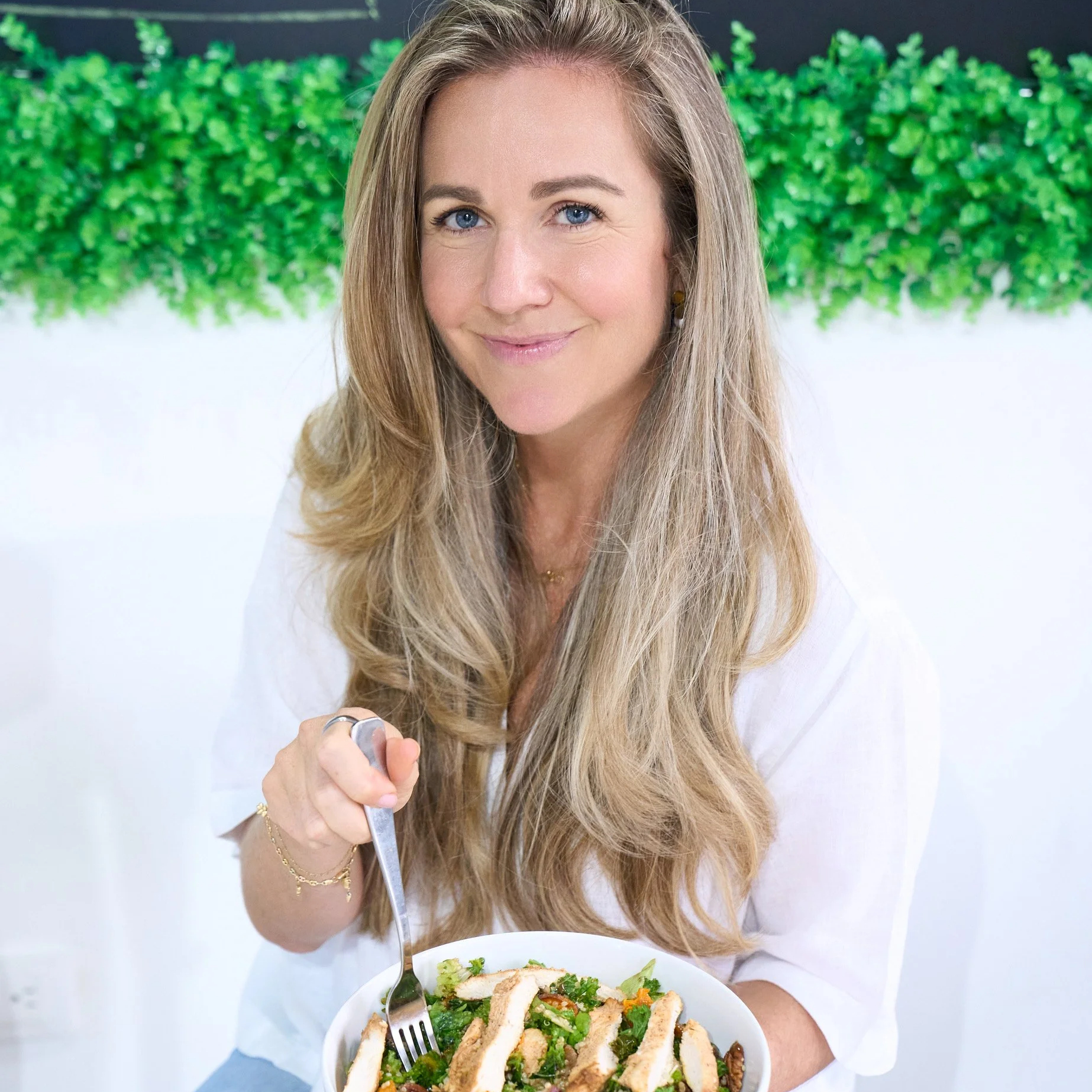
Apart from strenght training (which we delved into last week), here are 5 other areas that might need a little more attention (especially after 40!) - and could be the key to getting you feeling AMAZING in your body again!
Sleep may need more attention as we get older
Sleep is one of the first things I encourage women to look at when they don’t feel their best.
Hormonal changes can affect sleep, but so can stress, alcohol, caffeine, an overly busy schedule and simply trying to fit too much into the day. And poor sleep can create a frustrating cycle: less energy → less movement → more cravings → poorer recovery → even less energy.
You don’t need a perfect eight-hour night every night, but consistently protecting your sleep is one of the most powerful things you can do for your overall health - at any age.
HERE are some tips for combating insomnia and getting better sleep.

Stress and recovery count, a LOT more than we realize
One of the biggest mindset shifts I think we can make as we get older is understanding that more isn’t always better.
More workouts. More restriction. More fasting. More supplements. More productivity.
Sometimes your body needs the opposite: enough food, more rest, more sleep and more recovery. (I personally love my Oura ring for helping me track my daytime recover, stress and sleep!)
Chronic stress can affect sleep, digestion, appetite and energy, making it harder to feel balanced even when your lifestyle looks “healthy” on paper.
It can also be keeping your body in “fight or flight mode” (in a state of internal stress even if you don’t realize) and it protects itself by holding on to fat, so in very simple terms, we can think of excess stress “making us fat”!
Remember: your nervous system is part of your health, too.
Here are things I practice regularly to lower my stress (and one tool I think we should all use).
Your nutrition may need to evolve
This doesn’t mean you need a restrictive “diet.” Quite the opposite. Rather than automatically focusing on eating less, I prefer to think about eating strategically.
While I’m not a fan of calorie counting, we do need to take a step back and analyze your daily meals. Are you getting enough protein? Are plants and fiber making up a significant part of your meals? Are you eating enough healthy fats?
Are you being careful to minimze inflammatory foods, and fill your plate with whole foods rich in antioxidants?
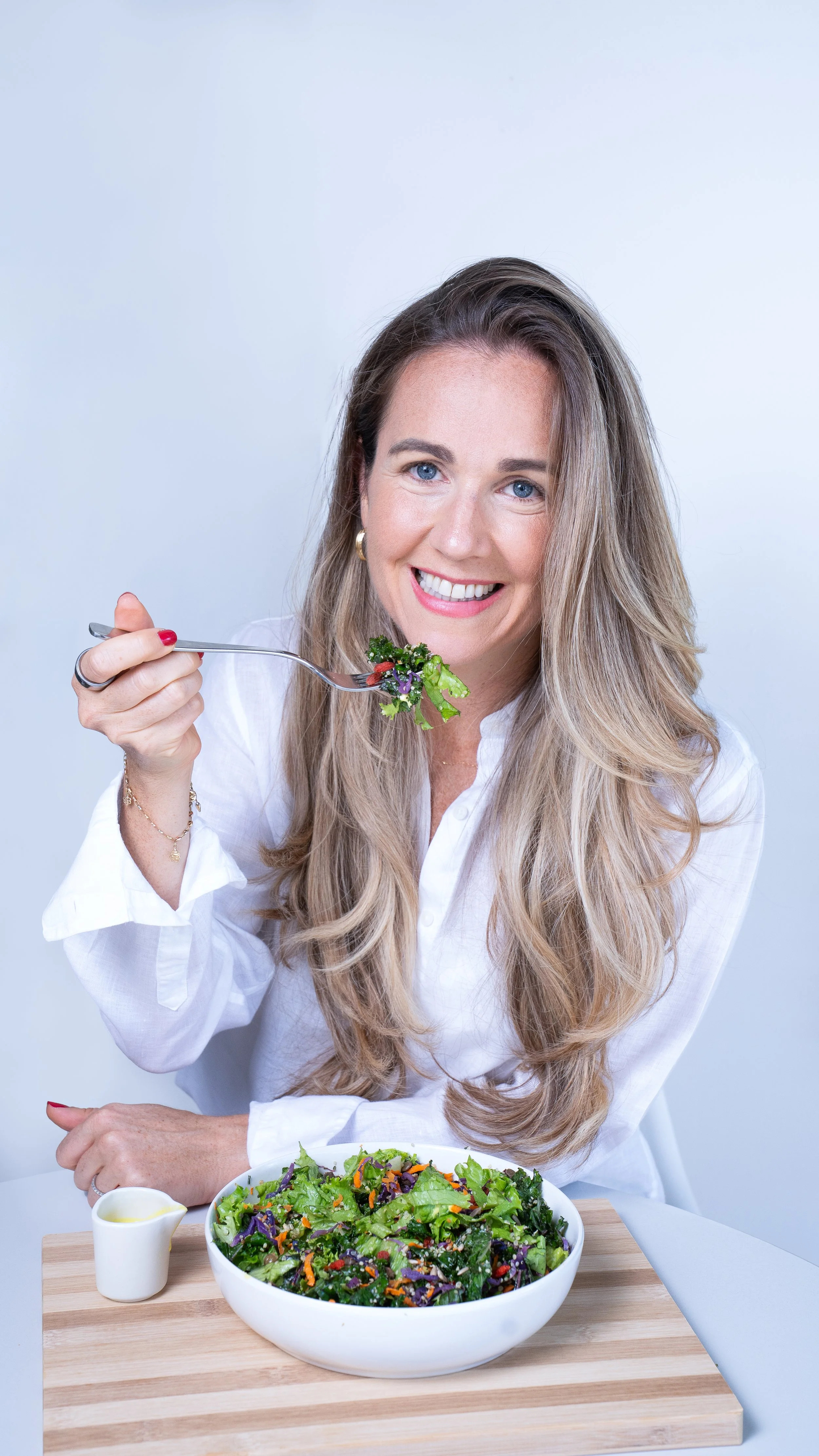
Are you including the nutrients your body needs to support muscle, bones and overall health? And are you fueling your activity appropriately?
Are you eating meals that actually satisfy you?? If not, then something isn’t right.
The goal isn’t perfection; it’s building meals that support your body rather than constantly trying to control it.
*Consider working with a health coach to work on tweaking your nutrition and diet to fit your changing body!
Which leads me to the next point…
Sometimes a little data can be surprisingly helpful
There’s another tool I think can be useful, and it doesn’t have to mean going on a diet.
Try tracking your food for a short period of time. Not forever. Not because you need to count every calorie for the rest of your life. But spending two weeks, or up to a month, tracking what you’re eating can give you something valuable: information.
Many of us have a general idea of what we eat, but our perception isn’t always the same as reality.
You might discover that you’re eating more carbohydrates than you realized, or that fats are adding up quickly through foods like oils, nuts, nut butters, avocado and other healthy foods. (That was definitely my case!). You might also discover that you’re actually eating less protein than you thought.
None of this means those foods are “bad.” It simply gives you a clearer picture of your current balance. And sometimes a few relatively small adjustments can make a meaningful difference.
Maybe you need a little more protein at breakfast. Maybe your portions of added fats are larger than you realized. Maybe you could shift some of your carbohydrates toward the meals around your workouts.
Maybe you’re eating enough overall, but the distribution of your protein, carbohydrates and fats could be improved.
I also highly suggest wearing a continuous glucose monitor for a short period of time as I find that many people, especially if stressed, are experiencing lots of glucose spikes and dips throughout the day, and thats the number one issue that can easily be fixed and can improve EVERYTHING.
The goal isn’t to become obsessed with numbers. The goal is to use a short period of tracking as a learning tool.
Once you understand your approximate calorie and macro intake (and potentially track your glucose to see what meals are spiking your blood sugar), you can stop tracking and use that knowledge to make more intuitive choices on a regular basis.
Think of it as a nutrition audit, not a diet.
Instead of asking, “What foods should I eliminate?”, ask: “What am I actually eating, and is it aligned with what my body needs?”
Don’t overlook digestion
Digestion can change throughout adulthood, and constipation, bloating or changes in bowel habits can have a surprisingly big effect on how you feel day to day.
Regular movement, adequate hydration, fiber, a diverse range of plant foods and enough food overall can all play a role. More tips on this HERE.
Potentially what you need is just some slowing down, chewing your food extra well, maybe creating more regular meal and bathroom routines, managing stress a bit more intentionally,… And sometimes a mini detox (with an experienced practitioner/coach like me!) focused on gut health can help a lot, too (together with all these other habits).
Remember, your digestion and your gut health are paramount for good health. If you have any inkling that maybe your digestion isn’t optimal, we have to address this first.
Takeways…
Your body isn’t failing you! This may be the most important takeaway.
If you feel like your old strategies aren’t working quite as well, it doesn’t necessarily mean you’ve lost discipline or that your metabolism is “broken.”
Your body is changing—and your approach can change with it.
Maybe you need more strength training.
Maybe you need more recovery, and more stress management.
Maybe you need to rethink how you’re fueling your workouts (sometimes a mini pre-workout snack can be a game changer! or just adding more protein post-workout).
Maybe you need to pay more attention to sleep.
Maybe you need to take a closer look at your overall calorie and macro intake. Or even track your blood sugar for a bit.
Maybe you need to focus more on your GUT health (and consider a “gut detox”)
Maybe you’re experiencing hormonal changes worth discussing with your healthcare provider (and considering Hormonal Replacement Therapy (HRT) for example).
Or maybe (very likely!) it’s a combination of several small things.
And wherever you are in life—your 30s, 40s, 50s, 60s or beyond—it is not too late to make changes that support your health.
Instead of asking, “What can I do more of?” try asking: “What does my body need from me at this stage of my life?” That question can lead to a much healthier, and more sustainable, approach to feeling your best.
Go over these 5 pillars and see where you might need to make a few tweaks or just pay a little more attention to (ideally with the support of a health coach!)
Love and better mid-life hormonal transitions,
Mariana