
Last week we talked about how to build a strong supplement routine. Once you’ve covered the basics and built your foundation, that’s when it makes sense to add in some of these great supplements - as long as you personalize based on your goals, your lifestyle, and your lab work.
Today I’m opening up on my own supplement cabinet to give you a glimpse of what that personalization can look like.
Adding supplements that support your personal goals
Before we dive in, I’d like to preface this by saying that these supplements aren’t ones I consider “essential” for everyone. Rather, they’re examples of supplements I personally choose to take (at this moment in life) because they align with my current specific health goals.
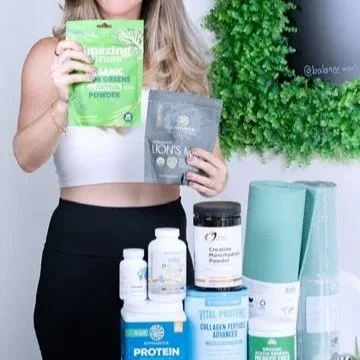
Here are a few of the supplements I personally use and why I chose them:
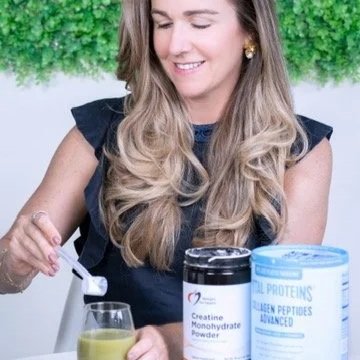
Collagen peptides. I add collagen to my morning matcha latte. While it’s not a complete protein, it can be a great addition to support healthy skin, hair, nails, joints, and connective tissue. I take Vital Proteins.
Protein powder. One of my priorities is getting enough protein throughout the day, and a high-quality protein powder helps me reach that goal/ I use it in my smoothies, I add it to yogurt, chia pudding and to make my healthy desserts!
I personally prefer plant-based including SunWarrior, Truvani, Ritual, Ora Organics and SproutLiving Epic protein. (I prefer texture and flavor of vegan). But if you want a whey protein, I recommend Just Ingredients, and for beef-based, BeWellbyKelly or Equip.
Creatine. Creatine is one of the most researched supplements available. Its been shown to help support muscle strength, exercise performance, recovery, healthy aging, and even cognitive function.
I started taking it when I turned 40, and plan to continue it! I currently use Designs for Health or Momentous, but also trust Thorne, Truvani and SportsResearch. I add it to my smoothie daily, but you can also just mix with water.
Functional mushrooms. Functional mushrooms have become increasingly popular, and while research is still evolving, some may offer interesting benefits.
Personally, I take Lion’s Mane because one of my health goals is supporting mental clarity and focus. I’ve always been a bit absent-minded and forgetful, so this is one supplement I’m experimenting with to see if it makes a noticeable difference for me. I currently add it to my daily matcha latte (together with collagen, moringa and sometimes acacia! It seems a lot but doesn’t bother me, and I really enjoy my matcha latte).
Other functional mushrooms you’re likely to hear about include:
Reishi, often used to support relaxation and the body’s response to stress.
Cordyceps, commonly used to support energy and exercise performance.
Turkey Tail, which has been studied for its potential role in supporting immune health.
While the early research is promising in some areas, we still have much to learn. I view these as optional supplements—not essentials.
Essential amino acids. I occasionally add essential amino acids, particularly around workouts or on days when my protein intake may be lower than usual. For most people who consistently eat enough high-quality protein, these might not be necessary.
Maca. I recently started taking maca as part of my personal approach to supporting hormonal health. Some studies suggest it may support energy, mood, libido, and hormonal well-being.
Ashwagandha. Ashwagandha is an adaptogenic herb that I currently take in the evening with my magnesium. It’s best known for helping the body adapt to stress, and some studies suggest it may support sleep quality and reduce feelings of stress in certain people.
Again, this is something I’ve chosen based on my current goals—it isn’t something I think everyone needs.
Greens powders, spirulina, moringa and chlorella. These nutrient-dense superfoods provide vitamins, minerals, antioxidants, and phytonutrients that can help complement a healthy diet. I see them as exactly that - a complement, not a replacement for eating plenty of whole vegetables. Some research suggests they may support immune health. help reduce oxidative stress and even assist our bodies in “detoxifying”.
I add a pinch of moringa to my daily matcha latte, and spirulina to my smoothies about 2/week. When I’m doing a conscious one week “reset” I’ll often add chlorella in between meals. But again, eating chloryphyll rich green veggies should always come first! That being said, if you struggle to eat enough greens, then I’d definitely add in a supergreens powder (high quality and organic). They can be great for kids, too!
Electrolytes. Electrolytes play an important role in maintaining proper hydration, especially during heavy sweating, prolonged exercise, hot weather, or illness. That being said, quality matters A LOT here. Most electrolytes are filled with unnecessary sugars, colors and preservatives, so please read ingredients and choose only clean formulas.
I don’t use electrolytes every day, but I do add Trace Minerals to my filtered water always, and keep LMNT on hand for sweaty workouts, hot days, or whenever I feel I need a little extra hydration. Even then, I usually use about one-third of a packet rather than a full serving (it’s usually enough!).
Other Supplements You May Be Curious About
NAC and Glutathione. NAC is an amino acid derivative that helps your body product glutathione - AKA your body’s “master antioxidant”. You can also find glutatione supplements directly. NAC and glutathione are known for supporting the body’s natural antioxidant defenses, detoxification processes, as well as healthy aging.
Personally I don’t find them necessary (yet!) if you live a healthy lifestyle, but could be helpful for someone needed some extra liver and detox support.
CoQ10 (Coenzyme Q10). CoQ10 is another powerful antioxidant that plays an important role in energy production within our cells, particularly in the mitochondria (often referred to as the “powerhouses” of our cells). Research suggests it may support:
Heart health
Healthy aging
Reducing oxidative stress
Fertility, particularly egg quality in women and sperm health in men
While I don’t take it year-round, it’s one of the supplements I have taken when fertility or reducing oxidative stress was a priority. I would also give to my hubbie together with his omega-3 (this one).
Colostrum. Colostrum is the nutrient-rich first milk produced after childbirth. As a supplement, it’s marketed for gut health, immune support, and athletic recovery. Some research is encouraging, particularly for digestive concerns. I’ve heard good things about this one.
NAD+ boosters. Supplements designed to increase NAD+ levels (such as NMN or NR) have become popular in the longevity space because NAD+ plays an important role in cellular energy production and healthy aging. The science is exciting, but it’s also still emerging. I admit I’m tempted! For now I’ve held off as I have other priorities, but I’ll probably come back to evaluating this one soon.
Other adaptogenic herbs. Adaptogens such as rhodiola, holy basil (tulsi), eleuthero, and schisandra are often used to help the body adapt to physical and emotional stress. Depending on the herb, they may support energy, focus, resilience, or relaxation.
These herbs can be helpful in the right situations, but they aren’t one-size-fits-all, and “natural” doesn’t automatically mean they’re appropriate for everyone.
Activated charcoal. Commonly known as a “detox” supplement, activated charcoal is used in some situations to help bind certain toxins or medications - but ideally under professional guidance.
I have activated charcoal in my cabinet for the occasional “just in case” situation, but it’s not something I take regularly or recommend as part of a daily supplement routine.
Note: activated charcoal can also bind to medications and other supplements, reducing their absorption. If you choose to use it, it should be taken well away from prescription medications and your regular supplements (and check with your doctor before using).
Digestive Enzymes. Digestive enzymes help support healthy digestion and nutrient absoption. They can be a helpful tool for people experiencing bloating, gas or digestive issues, and during periods of gut healing. I’ve used them in the past and found them super useful.
I’m currently not taking them as my digestion has improved immensely, but they were helpful during my gut healing, and they can also be a great tool to have on hand for heavy meals (including dinner parties and restaurants).
That being said, they’re not necessary for most people that have good digestion. And if you do have gut issues and choose to take them, remember they’re a temporary band-aid but you must address the root cause and fix underlying gut issues (or you’ll be dependant on these enzymes forever, and it my not be enough).
Supplements for Fertility & Pregnancy: A Targeted Approach
One of the best examples of personalized supplementation is fertility.
When someone is trying to conceive, the goal isn’t to take every fertility supplement available—it’s to identify which nutrients may be most beneficial based on their individual health, diet, and lab work.
Some supplements that are commonly considered (under the guidance of a healthcare provider) include:
A high-quality prenatal vitamin to help provide key nutrients such as folate, iodine, iron (when needed), and other essential vitamins and minerals. Note: I suggest taking a prenatal while trying to conceive as well as for your first few months postpartum.
My favorites include: Perelel (they go by trimester, I love this one for postnatal and everyday too, even perimenopause), WeNatal, Thorne prenatal, and Needed.
If you have low iron, you may benefit from taking extra iron.
Extra vitamin B6 can also help with nausea!
Omega-3 fatty acids, which support overall health and fetal brain development once pregnancy occurs.
Vitamin D, if blood levels are low.
CoQ10, which may help support egg quality in women and sperm quality in men by helping protect cells from oxidative stress.
Choline, an important nutrient for baby’s brain development that many women don’t get enough of through diet alone.
Magnesium, if intake is low or there are signs of deficiency.
Depending on the person, your healthcare provider may also recommend other targeted supplements, but those decisions should be based on medical history, symptoms, and laboratory testing whenever possible.
The key takeaway is that fertility supplementation should be purposeful, not overwhelming. More supplements don’t necessarily increase your chances of conceiving. In fact, focusing on excellent nutrition, managing stress, getting quality sleep, exercising regularly, and addressing any nutrient deficiencies often provides the strongest foundation before layering on additional supplements.
Same applies to pre and postnatal. Take just what YOU need (and remember everyone is different!).

CONCLUSION
The wellness world is full of exciting new products, and I genuinely enjoy learning about them (and experimenting with many, too).
But before adding anything new, I always ask myself three questions:
Does this support one of my current health goals?
Is there good evidence that it may benefit someone like me?
Do my symptoms or lab results suggest I actually need it?
If the answer is no, I usually skip it.
I’ve found that staying consistent with the fundamentals—and with a few high-quality supplements chosen intentionally—has done far more for my health than constantly chasing the newest trend.
Sometimes, less really is more.
Hope this was helpful! Knowledge is even more powerful when it’s shared. If this blog gave you clarity or taught you something new, please share it with someone who might find it helpful.
Want more articles like this? Subscribe to my newsletter to receive new blog posts, simple wellness tips, nutritious recipes, and practical health advice—without the overwhelm.
Here’s to making healthy living simpler, one step at a time.